
Contents:
- What a Luxury Flower Studio Actually Is
- The studio versus the order-gatherer
- A Short History of the Custom Bouquet
- Sourcing: Where the Flowers Come From
- How grading works
- The Seasonal Calendar Behind Custom Bouquets
- The Cold Chain: Keeping Flowers Asleep
- Ethylene, the invisible problem
- Processing and Conditioning: The Hidden Hour
- Designing the Custom Bouquet
- Choosing a palette
- Thinking in roles: focal, secondary, filler, texture
- The Spiral Technique and Bouquet Mechanics
- Boxes and baskets
- Custom Bouquet vs. Pre-Designed Arrangement: A Common Confusion
- Regional Differences: Northeast, South, and West Coast
- The Northeast
- The South, especially South Florida
- The West Coast
- Packing and Delivery: The Final Mile
- Timing is part of the design
- What Florists Know: Insights From the Workroom
- Buy buds, not blooms
- Recut constantly
- Split very large arrangements
- Mind the hospital room
- Practical Application: Building a Studio-Style Bouquet at Home
- Tools and materials
- Step-by-step
- When to hand it to professionals
- A realistic budget comparison
- Frequently Asked Questions
- How long does it take a florist to make a custom bouquet?
- Why do luxury bouquets cost more than grocery store flowers?
- Can I request specific flowers in a custom bouquet?
- How long should a custom bouquet last?
- What is the best way to keep a delivered bouquet fresh in hot weather?
Roughly four out of every five cut flowers sold in the United States were grown in another country, and the large majority of those imports land at a single airport: Miami International. On a busy week before Valentine’s Day, refrigerated cargo planes from Bogotá and Quito unload millions of stems there, and most of them are on a truck within hours. That fact explains a great deal about how a luxury flower studio works. A custom bouquet that arrives on a doorstep in Coral Gables or Aventura is the last step of a journey that often began on a farm high in the Andes about a week earlier.
This guide goes behind the scenes of a luxury flower studio to show how custom bouquets are made, from the cold chain and the conditioning bucket to the spiral hand-tie and the delivery box. It is written for readers who like to understand the mechanics of things, and who may want to borrow a few professional habits for their own kitchen-table arrangements.
What a Luxury Flower Studio Actually Is
The phrase “flower shop” covers a wide range of businesses. At one end sits the grocery store bucket, where bunches are wrapped at a packing facility and shipped in ready to sell. In the middle is the traditional neighborhood florist, which keeps a walk-in cooler, a counter, and a catalog of standard arrangements. At the other end is the studio model, where the space is organized around design work rather than retail browsing.
A studio usually has fewer pre-made items on display. Its value lies in three things: access to higher grades of flowers, the skill to combine them in a way that looks gathered rather than manufactured, and control over timing so the bouquet reaches the recipient at its peak. Many studios work on upper floors of office buildings or in light industrial spaces, because they need cooler rooms, long worktables, and loading access more than they need street-level foot traffic.
The studio versus the order-gatherer
One structural difference matters more than any other. Some online flower businesses take an order and pass it to whichever local shop in a network accepts it. The customer sees a photo, but the shop that fills the order may substitute stems, use a different vase, or design in a different style. A studio that designs and delivers its own work removes that relay. The person who chose the flowers at the market is often the same person who conditions them, builds the bouquet, and checks it before it leaves.
The My Peonika flower studio in Hallandale Beach is a good example of the in-house model. It works from a 10th floor suite on East Hallandale Beach Boulevard, serves the Miami area from Brickell and Coconut Grove to Sunny Isles Beach and Pembroke Pines, and its florists assemble each bouquet shortly before delivery rather than days ahead.
A Short History of the Custom Bouquet
Hand-held bouquets are old. Victorian “tussie-mussies,” small posies of herbs and flowers, carried coded messages in the 19th century, and the floriography books of that era assigned meanings to everything from red roses to yellow carnations. Those meanings still echo today. Florists regularly field questions about whether pink means gratitude or whether white signals sympathy.
The modern American flower trade took shape much later. Through the mid 20th century, most cut flowers in the United States were grown domestically, with California, Florida, and greenhouse operations in the Northeast supplying regional markets. That began to shift in the late 1960s and 1970s, when growers in Colombia, taking advantage of the high-altitude savanna near Bogotá with its steady temperatures and long, even daylight, started exporting carnations and roses to the US. Ecuador followed with roses known for long stems and large heads. Trade policy in the early 1990s that reduced tariffs on Andean flowers accelerated the change.
By the 2000s, refrigerated air freight had made it routine for a rose cut in Ecuador on Monday to sit in a Florida studio by Wednesday or Thursday. Kenya became a major supplier to Europe, and Dutch auctions in Aalsmeer became a global trading hub for everything from tulips to garden roses. The custom bouquet, as a product, grew out of that abundance. Once florists could get almost any flower at almost any time of year, the value shifted from simply having flowers to combining them with taste.
Sourcing: Where the Flowers Come From
Every custom bouquet begins with buying decisions. A luxury studio typically sources through a combination of channels: direct relationships with importers, local wholesale houses, and occasionally standing orders with specific farms or brokers. Miami is unusually well placed for this, because so much of the country’s imported product clears customs and agricultural inspection there before it moves north.
My Peonika sources from the Netherlands, Ecuador, Kenya, Colombia and other origins. Each region tends to specialize:
- Ecuador: Large-headed roses on long, straight stems, grown at altitude where cool nights slow development and intensify color.
- Colombia: A huge range of roses, spray roses, carnations, alstroemeria, and hydrangeas, plus many filler and accent flowers.
- Kenya: Roses (including many spray varieties) grown near Lake Naivasha and the highlands, prized for consistency.
- The Netherlands: The trading center for specialty items such as ranunculus, anemones, tulips, delphinium, and many garden rose varieties, plus flowers routed through Dutch auctions from around the world.
How grading works
Roses are commonly sold by stem length in centimeters, such as 50, 60, 70, or 80 cm, and by head size. Longer stems and bigger heads cost more at wholesale, sometimes two or three times as much per stem as shorter grades of the same variety. A studio building a tall vase arrangement needs long stems; a compact box arrangement does not. Part of a florist’s craft is buying the right grade for the design rather than simply the most expensive one.
Garden roses deserve a special mention. These cupped, many-petaled varieties can carry 70 or more petals, compared with roughly 10 to 15 on a classic hybrid tea rose. They open more slowly and bruise more easily, so they demand gentler handling throughout the process.
The Seasonal Calendar Behind Custom Bouquets
Global sourcing has flattened the seasons, but it has not erased them. Some flowers remain genuinely seasonal, and prices for almost everything spike around a few key holidays. Here is a practical calendar of how a Florida studio’s year tends to unfold.
- January and early February: Valentine’s Day is the single largest event of the year for florists. Studios place rose orders weeks in advance, and wholesale rose prices commonly rise sharply in the two weeks before February 14. Ranunculus and anemones from Dutch and Israeli growers are near their peak quality.
- March and April: Spring bulb flowers and ranunculus remain strong. Anemones, which have a short natural season, start to fade from the market toward late spring. Easter brings demand for white and pastel palettes.
- May and June: This is classic peony season in the Northern Hemisphere. Mother’s Day in May is the second biggest flower holiday in the US, and wedding season begins in earnest. Field-grown peonies from the American Midwest, the Pacific Northwest, and Europe flood the market.
- July and August: Northern peonies give way to sources such as Alaska, whose growers harvest later in the summer. Hydrangeas and lisianthus are strong. In South Florida, heat makes the cold chain especially critical.
- September and October: Southern Hemisphere sources, including Chile and New Zealand, begin to send peonies. Autumn palettes with burgundy, rust, and dusty mauve gain popularity.
- November and December: Thanksgiving and the winter holidays drive orders for centerpieces and gifts. Greenery such as eucalyptus and textural evergreens appear in more designs. Studios advise ordering early for Christmas.
Peonies illustrate how this calendar affects a custom order. My Peonika offers peonies year-round when stock is available, but many peony items sell out outside the main seasons, because supply at those times comes from a limited number of farms in the opposite hemisphere. A request for 50 blush peonies in May is easy. The same request in late January may require flexibility on color or a mix with garden roses.
The Cold Chain: Keeping Flowers Asleep
Cut flowers are alive. Once harvested, they keep breathing, using stored sugars, and moving toward maturity and decay. Cold slows all of that. The industry standard for most cut flowers is to hold them just above freezing, around 33 to 36 degrees Fahrenheit, from the farm’s post-harvest room through air freight and into the importer’s cooler. Tropical flowers such as anthuriums and many orchids are the exception; they suffer chilling injury at those temperatures and prefer something closer to 55 to 60 degrees.
Every break in the cold chain costs vase life. A box of roses that sits for two hours on a hot tarmac can lose days of longevity, even if it looks fine on arrival. Experienced buyers learn to check boxes by touch, feel for warmth, look for gray mold at the base of rose heads, and inspect leaf color.
Ethylene, the invisible problem
Ethylene is a plant hormone that speeds aging. Ripening fruit releases it, as do decaying plant material and engine exhaust. Carnations, delphinium, and several other flowers are quite sensitive to it. This is why studios keep coolers clean, remove spent leaves promptly, and never store fruit near flowers.
Processing and Conditioning: The Hidden Hour
When flowers arrive at the studio, they are usually dehydrated and tightly packed. They have spent days in boxes with their stems dry or wrapped. Before any design work begins, every stem goes through processing, which most florists consider the most important step in the entire workflow.
A typical processing sequence looks like this:
- Unpack and inspect. Remove sleeves and packaging, count stems, and set aside damaged flowers. Note the variety, origin, and condition.
- Strip foliage. Remove every leaf that would sit below the waterline. Submerged leaves rot quickly and feed the bacteria that clog stems.
- De-thorn carefully. On roses, florists strip thorns with a tool or by hand, taking care not to gouge the stem bark, which opens a path for infection.
- Recut stems. Cut 1 to 2 inches off each stem at a sharp angle with a clean knife or sharp pruners. An angled cut exposes more surface area and keeps the stem from sitting flat on the bucket bottom.
- Hydrate. Place stems into clean buckets with water and a hydration solution, then let them drink, often for several hours or overnight, in the cooler.
Some flowers need special handling. Hydrangeas drink through their petals as well as their stems and may be fully submerged to revive. Ranunculus have hollow, soft stems that bend easily and do best in shallow water. Woody stems such as viburnum benefit from a vertical slit at the base. Anemones keep growing after they are cut and continue to move toward light, which designers factor into placement.
Designing the Custom Bouquet
With conditioned flowers ready, the design work begins. A custom bouquet starts with a conversation, either direct or through an order form: the occasion, the budget, the recipient, and any color preferences. My Peonika’s “Artist’s Choice” option shows how this works in practice. The client picks a budget and a palette, from $116 to $365, and the florist designs freely from what is freshest that day. That format tends to produce the best work, because it lets the designer match the order to the strongest flowers in the cooler rather than forcing a specific stem that may be past its prime.
Choosing a palette
Color decisions shape everything else. Designers often work with one of a few frameworks:
- Monochrome: A single color family in varied shades and textures, such as white garden roses, cream ranunculus, and white lisianthus.
- Analogous: Neighboring colors on the wheel, such as blush, peach, and coral, which blend smoothly.
- Complementary accents: A mostly soft palette with a small, deliberate contrast, such as dark plum anemone centers against pale pink petals.
Soft palettes in pale pink, powder, lilac, and beige have been especially popular in recent seasons, and they suit Miami’s bright light well. Flower meanings also enter the conversation. Pink peonies are often associated with new beginnings and gratitude, coral ranunculus with gratitude, and red ranunculus with passion.
Thinking in roles: focal, secondary, filler, texture
Professional designers usually sort ingredients by role. Focal flowers, such as peonies, garden roses, or large hydrangea heads, draw the eye. Secondary flowers, such as ranunculus, spray roses, or lisianthus, support the focal blooms and fill the middle layer. Fillers, like baby’s breath or stock, soften transitions. Texture elements, such as eucalyptus, viburnum, or delphinium spikes, add movement and line. A balanced bouquet typically uses all four roles, though monobotanical designs, such as a bouquet made only of ranunculus, deliberately rely on variety within one flower.
The Spiral Technique and Bouquet Mechanics
The hand-tied spiral is the foundation of most luxury bouquets, and it is the single most useful skill a DIY arranger can learn. The method creates a bouquet that holds its shape, sits in water evenly, and lets each flower drink freely.
Here is how it works. The designer holds the first stem vertically in one hand, at what will become the binding point, usually about two thirds of the way down from the bloom. Each subsequent stem is added at the same angle, with its head leaning in one direction and its base pointing the other way. After each addition, the designer gives the bundle a slight quarter turn. Over dozens of stems, the stems form a spiral below the binding point, and the heads fan out into a dome above it.
Three details separate polished work from amateur attempts:
- Consistent binding point. Every stem must cross at the same spot. If the binding point drifts, the bouquet becomes lopsided and unstable.
- Stems all angled the same way. A single stem placed against the spiral breaks the structure and crushes neighbors.
- Recessed and raised heads. Garden-style bouquets avoid a flat surface. Some blooms sit low, close to the binding point, while others float above, creating depth.
Once complete, the bouquet is tied at the binding point with twine or bind wire, and the stems are cut to an even length so the bouquet can stand on its own. Larger designs, especially those with 50 or 100 stems, may be built in sections or with a hidden structure, such as a grid of tape across a vase opening or a reusable frame, to keep heavy heads from collapsing.
Boxes and baskets
Box and basket arrangements use different mechanics. Instead of a hand-tied spiral, the designer usually inserts stems into a water source, often a lined container with hydrated floral material or water tubes. Flowers in boxes are often cut shorter, which reduces the distance water must travel and can help them last. These designs suit hospital rooms and small tables, where a tall vase would tip or block sightlines.
Custom Bouquet vs. Pre-Designed Arrangement: A Common Confusion
People often use “custom bouquet” and “pre-designed arrangement” interchangeably, but they describe different processes and suit different situations.
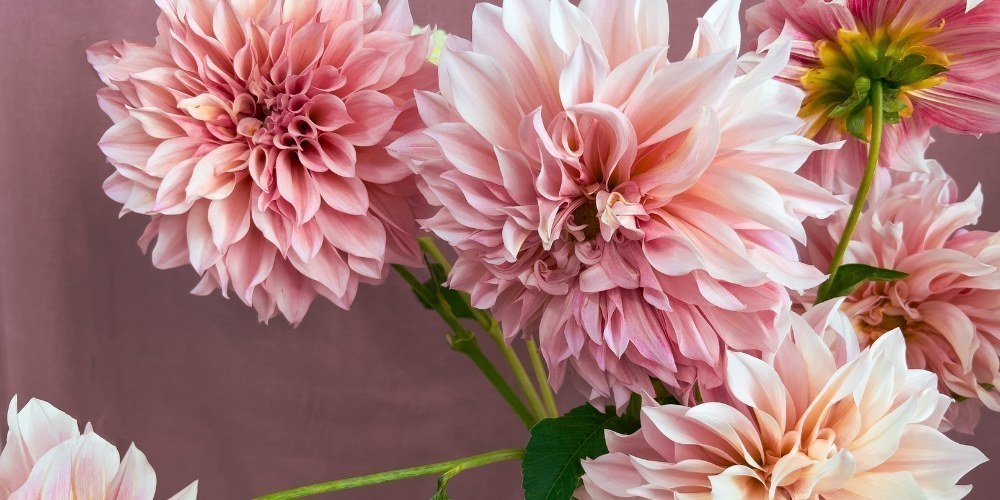
A pre-designed arrangement is a recipe. It has a name, a photo, a fixed list of ingredients, and a set price for each size. The studio aims to reproduce it closely each time. Large rose bouquets in sizes of 21, 33, 50, 75, or 100 stems are typical examples. These are predictable, which makes them ideal when the sender needs to know exactly what will arrive, such as a corporate gift or an anniversary order matching a past bouquet.
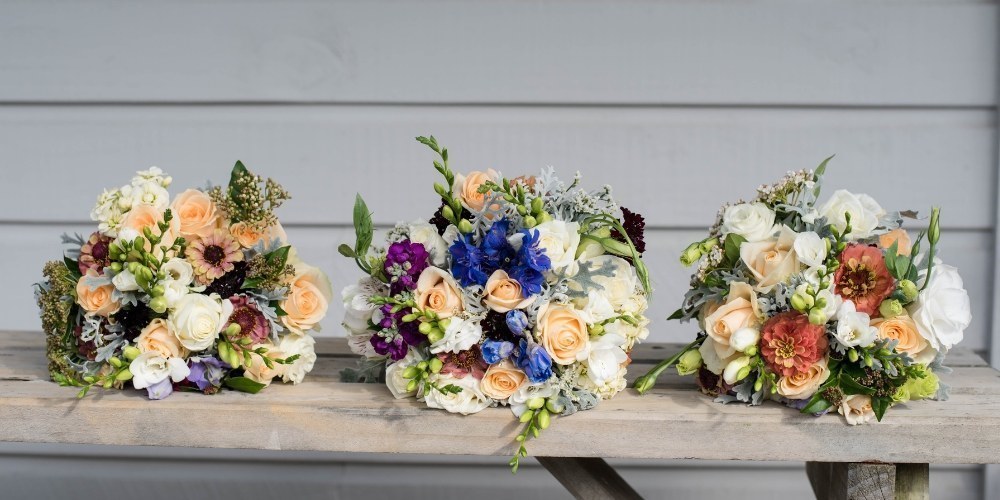
A custom bouquet is a brief. The client gives guidance on budget, palette, mood, and perhaps a few favorite flowers, and the designer chooses the specific stems. The result is less predictable but often fresher and more distinctive, because the designer can use whatever arrived at peak quality that morning.
A third category often gets confused with both: the supermarket or mass-market “mixed bouquet.” These are assembled at a packing facility, sometimes thousands of miles away, often a week or more before sale. They are perfectly fine for casual use, but the stems tend to be shorter grades, and the bouquet has spent its early life in transit rather than in a design studio’s cooler. The price gap reflects labor, flower grade, and freshness, not just branding.
A quick rule of thumb: choose a pre-designed piece when consistency matters, a custom design when freshness and personality matter, and a mass-market bunch when the purpose is simply to have flowers on the table this week.
Regional Differences: Northeast, South, and West Coast
How a studio operates depends a lot on where it sits. American flower culture varies by region, and those differences show up in sourcing, pricing, and style.
The Northeast
Studios in New York, Boston, and Philadelphia often source through large wholesale districts, such as the long-standing flower market blocks in Manhattan’s Chelsea area. Cold winters mean less local supply from November through April, so imports dominate. Summer brings a burst of local field flowers from New Jersey, upstate New York, and New England farms, and designers lean into dahlias, zinnias, and garden-cut stems. Indoor heating in winter dries the air, which can shorten vase life.
The South, especially South Florida
Miami’s position as the main gateway for South American flowers gives studios here an advantage in freshness and selection. Imports often reach South Florida studios faster than they reach studios farther north, because they do not need another long truck ride after clearing inspection. The tradeoff is heat and humidity. Flowers wilt faster outdoors, delivery vehicles must be cooled, and bouquets should not sit on a porch in the afternoon sun. Tropical flowers such as orchids and anthuriums feel at home in the local style, and bright, celebratory arrangements suit the region’s events culture.
The West Coast
California is the country’s largest domestic cut flower producer, and studios on the West Coast have access to local roses, ranunculus, anemones, and specialty crops from farms around Santa Barbara, San Diego County, and the Central Coast. Oregon and Washington add peonies, dahlias, and foliage, while Alaska supplies late-summer peonies. West Coast design often favors a loose, seasonal, “locally grown” aesthetic, and clients there are more likely to ask about farm origin.
These differences mean that a design that is easy and affordable in one region may be costly in another. A request for local ranunculus in February is natural in Southern California. In Boston, the same request will almost certainly be filled with imports.
Packing and Delivery: The Final Mile
The last stage of a custom bouquet’s journey is often the riskiest. A bouquet that was built with care can still arrive dry or crushed if packing is poor. Professional studios think about hydration, protection, and timing as a single system.
My Peonika handles this with a specific setup. Bouquets travel in an aqua hydration pack, a sealed water reservoir around the stem base, inside a protective box. Each delivery includes flower food, care instructions, and a complimentary card, finished with the studio’s signature ribbon and a kraft bag. Same-day delivery is available seven days a week for orders placed by 5 PM, and delivery on about an hour’s notice is possible when the flowers are in stock. Orders of $190 or more within 10 miles receive free delivery, and in-store pickup is available at the Hallandale Beach studio.
The studio also backs its work with a 3-Day Freshness Guarantee. If the care instructions are followed and the bouquet wilts within three days, it is replaced free of charge. That is a meaningful commitment in a climate where heat can shorten vase life, and it reflects confidence in the conditioning that happens before the bouquet ever leaves the cooler.
Timing is part of the design
Assembling a bouquet shortly before delivery, as the florists at My Peonika do, is not just a convenience. Every hour a finished bouquet sits at room temperature is an hour of vase life spent before the recipient sees it. Building close to the delivery window means the flowers arrive with their full lifespan still ahead of them. It also lets the designer pick buds at the right stage of opening, so peonies and ranunculus unfold over the next several days rather than shattering early.
What Florists Know: Insights From the Workroom
Studio florists share a set of habits that rarely appear in glossy photos but make an outsized difference. These observations come from general professional practice and from the care guidance that luxury studios give their clients.
Buy buds, not blooms
Ranunculus and peonies should be bought slightly closed. A fully open ranunculus has already spent much of its life. A bud that is soft to the touch with color showing will open over several days and can last 7 to 10 days in the vase. Peonies in a “marshmallow” stage, soft when gently squeezed, open reliably; rock-hard buds may never open at all.
Recut constantly
Studios recut stems at every step: after unpacking, before design, and before final packing. At home, the same principle applies. Recutting about half an inch at an angle every two to three days and changing the water every other day removes the clogged section of stem and resets water uptake.
Split very large arrangements
A 100-stem bouquet looks stunning on arrival, but tightly packed stems compete for water and trap moisture between heads. After a day or two of display, many florists recommend dividing a very large arrangement into two or three vases. Each smaller grouping gets fresher water and more air circulation.
Mind the hospital room
For new baby and hospital deliveries, compact designs work better than tall ones, and studios avoid strongly scented and high-pollen flowers such as lilies. Soft pink roses, blush ranunculus, and hydrangeas are common choices for a baby girl, and many studios add balloons or small plush toys. Some hospitals restrict flowers in certain units, so senders should check policies before ordering.
Practical Application: Building a Studio-Style Bouquet at Home
DIY arrangers can borrow most of a luxury studio’s process with modest tools. The following plan produces a 25 to 30 stem hand-tied bouquet with a professional feel.
Tools and materials
- A sharp floral knife or bypass pruners (kitchen scissors crush stems)
- Two clean buckets and a clean vase
- Flower food packets
- Twine or rubber bands for binding
- Roughly 5 focal stems, 10 secondary stems, 5 filler stems, and 5 to 7 stems of greenery or texture
Step-by-step
- Shop early in the week. Many local wholesalers and grocery floral departments receive shipments early in the week. Ask staff when deliveries arrive.
- Process immediately. Strip lower leaves, recut stems at an angle, and place everything in cool water with flower food. Let the flowers drink for at least four hours, ideally overnight in the coolest room of the house.
- Lay out your ingredients by role. Group focal, secondary, filler, and texture stems on a table so you can see your palette at a glance.
- Start the spiral. Begin with a sturdy greenery stem, then add a focal flower, then a secondary, turning a quarter turn each time. Keep the binding point steady.
- Vary heights. Let some blooms sit low and a few rise above the dome. Step back and check from the side every few additions.
- Bind and trim. Tie firmly at the binding point. Cut stems evenly so the bouquet stands on its own, then place it into a clean vase filled two thirds with fresh water and flower food.
- Maintain. Recut and refresh water every two to three days, remove fading blooms, and keep the vase away from direct sun, heating vents, and fruit.
When to hand it to professionals
Home arranging is rewarding, but some projects are better left to a studio. Very large designs of 50 to 100 stems, structured box and basket arrangements, and anything that must arrive at a specific time all benefit from professional mechanics and logistics. In the Miami area, My Peonika’s large bouquet collection covers those situations, with garden rose designs in sizes from 21 to 100 stems and peony bouquets from 10 to 100 stems. Weddings and events are a separate category with longer lead times, and they are not available same-day.
A realistic budget comparison
Rough estimates help set expectations. A DIY 25 stem bouquet from a grocery store might cost $30 to $60 in flowers, while premium wholesale stems such as garden roses or peonies can push the same count past $100 before labor. Luxury studio bouquets reflect the cost of higher stem grades, conditioning time, design skill, packaging, and delivery. As a reference point, a custom “Artist’s Choice” bouquet at My Peonika runs $116 to $365, and a 100 red rose bouquet is $458. The gap between DIY and studio work narrows quickly once flower grade and labor hours are counted honestly.
Frequently Asked Questions
How long does it take a florist to make a custom bouquet?
The design itself typically takes 20 to 60 minutes for a standard bouquet, longer for 100-stem pieces or complex boxes. That figure hides the larger time investment: sourcing, unpacking, and conditioning can take several hours spread over one or two days before any design work starts.
Why do luxury bouquets cost more than grocery store flowers?
The price reflects flower grade (longer stems, larger heads, specialty varieties such as garden roses), the labor of processing and design, protective packaging with a water source, and delivery timing. Freshness is the hidden factor. A studio bouquet assembled shortly before delivery has more vase life ahead of it than a bunch that spent a week in transit.
Can I request specific flowers in a custom bouquet?
Yes, though flexibility helps. Seasonal flowers like anemones, ranunculus, and peonies may be scarce or more expensive at certain times of year. Giving a florist a palette and one or two must-have flowers, rather than an exact recipe, usually produces the best results.
How long should a custom bouquet last?
With proper care, most mixed bouquets last about 5 to 10 days. Roses commonly last 5 to 10 days, and ranunculus 7 to 10 days. Hydrangeas can be shorter if they dry out. Recutting stems, changing water, and keeping flowers cool extend that range.
What is the best way to keep a delivered bouquet fresh in hot weather?
Bring the bouquet indoors immediately, keep it in the hydration pack or move it to a clean vase with fresh water and flower food, and place it away from direct sun and air conditioning vents blowing hot or very dry air. At night, moving the vase to the coolest room in the house adds days of life.